

Introduction
Proper food wrapping and storage are essential for maintaining freshness, preserving flavor, preventing contamination, and reducing food waste. Whether you’re a restaurant owner, bakery operator, cloud kitchen, caterer, or home cook, using the right packaging material for different types of food can significantly improve food quality and shelf life.
Choosing the appropriate wrapping paper, butter paper, baking paper, aluminium foil, or food-grade packaging not only protects food but also enhances presentation and ensures compliance with food safety standards.
In this guide, we’ll explore the best practices for wrapping and storing different types of food to help you keep every meal fresh, hygienic, and delicious.
Why Proper Food Wrapping Matters
Food packaging is more than just covering food—it serves several important purposes:
- Preserves freshness and flavor
- Prevents contamination
- Protects food during transportation
- Reduces moisture and grease leakage
- Extends shelf life
- Improves food presentation
- Minimizes food waste
- Maintains hygiene and food safety
Using food-grade packaging materials ensures that your food remains safe for consumption while reaching customers in excellent condition.
Best Packaging Materials for Different Foods
1. Burgers & Sandwiches
Recommended Packaging:
- Greaseproof Paper
- Food Wrapping Paper
- Butter Paper (for light wrapping)
Burgers and sandwiches often contain sauces, cheese, and oils that can leak through ordinary paper. Grease-resistant wrapping paper keeps the packaging clean while maintaining freshness.
Best Practices
- Wrap tightly to retain heat.
- Use food-grade greaseproof paper.
- Avoid excessive moisture inside the wrap.
- Serve immediately for best texture.
2. Wraps, Rolls & Shawarma
Recommended Packaging:
- Food Wrapping Paper
- Greaseproof Paper
- Aluminium Foil (outer layer)
Wraps benefit from a combination of greaseproof paper and foil to keep them warm and easy to handle.
Best Practices
- Wrap securely to prevent fillings from spilling.
- Keep sauces contained.
- Use foil for longer deliveries.
3. Bakery Products
Recommended Packaging:
- Butter Paper
- Baking Paper
- Parchment Paper
Cookies, pastries, croissants, and cakes require non-stick packaging that protects delicate textures.
Best Practices
- Allow baked goods to cool before wrapping.
- Prevent condensation.
- Store in airtight containers after wrapping.
4. Cakes & Desserts
Recommended Packaging:
- Baking Paper
- Parchment Paper
These papers help prevent frosting and decorations from sticking while maintaining product quality.
Best Practices
- Chill cakes before packaging.
- Avoid direct pressure on decorations.
- Store at recommended temperatures.
5. Pizza
Recommended Packaging:
- Greaseproof Paper
- Food Wrapping Paper
Pizza slices remain crisp when excess grease is absorbed while moisture is minimized.
Best Practices
- Use grease-resistant paper.
- Avoid sealing while extremely hot.
- Package immediately before serving.
6. Fried Foods
Recommended Packaging:
- Greaseproof Paper
- Food Wrapping Paper
French fries, fried chicken, nuggets, and snacks produce excess oil.
Best Practices
- Use highly grease-resistant paper.
- Allow slight ventilation to prevent sogginess.
- Avoid plastic wrapping immediately after frying.
7. Frozen Foods
Recommended Packaging:
- Aluminium Foil
- Freezer-Safe Food Wrapping Paper
Proper wrapping prevents freezer burn and moisture loss.
Best Practices
- Remove excess air.
- Seal tightly.
- Label with storage dates.
8. Fresh Produce
Recommended Packaging:
- Food-Grade Paper Bags
- Light Wrapping Paper
Many fruits and vegetables require airflow to stay fresh.
Best Practices
- Do not seal tightly.
- Store according to refrigeration requirements.
- Separate fruits that produce ethylene gas.
9. Meat & Seafood
Recommended Packaging:
- Aluminium Foil
- Food-Grade Wrapping Paper
These foods require secure packaging to prevent leakage and contamination.
Best Practices
- Keep refrigerated immediately.
- Avoid cross-contamination.
- Use separate packaging for raw products.
Food Storage Tips by Temperature
Refrigerated Foods
Store at 0°C to 5°C:
- Dairy products
- Cooked meals
- Fresh meat
- Seafood
- Sandwiches
Use moisture-resistant food wrapping.
Frozen Foods
Store below -18°C:
- Frozen vegetables
- Meat
- Seafood
- Prepared meals
Use freezer-safe wrapping materials.
Room Temperature Storage
Suitable for:
- Bread
- Cookies
- Dry snacks
- Biscuits
Keep food in cool, dry conditions away from direct sunlight.
Common Food Wrapping Mistakes
Avoid these mistakes to ensure food safety and quality:
Using Non-Food-Grade Paper
Always use certified food-grade packaging materials.
Wrapping Hot Food Too Tightly
Steam buildup causes sogginess.
Allow slight cooling before sealing.
Mixing Raw and Cooked Foods
Always use separate wrapping materials to prevent contamination.
Reusing Greasy Wrapping Paper
Use fresh food wrapping paper for every serving.
Incorrect Storage Temperature
Even premium packaging cannot compensate for poor storage conditions.
Benefits of Eco-Friendly Food Packaging
Modern food businesses increasingly prefer sustainable packaging because it offers numerous advantages:
- Reduces plastic waste
- Supports environmental responsibility
- Improves brand reputation
- Appeals to eco-conscious customers
- Complies with sustainability initiatives
- Safe for food contact
Choosing recyclable and biodegradable food wrapping materials contributes to a cleaner environment while maintaining product quality.
Why Choose OnnixWrap Food Packaging Solutions?
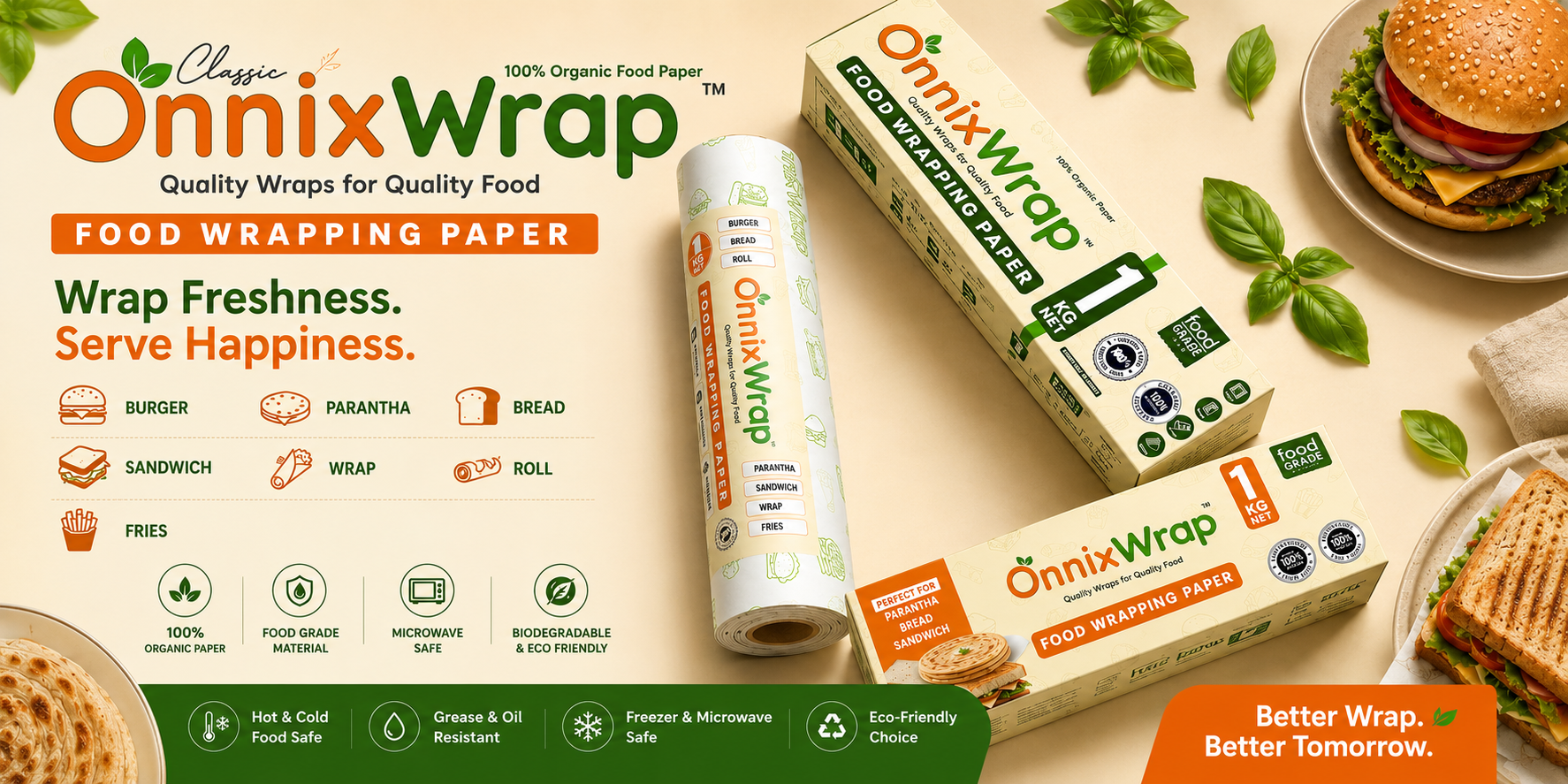
At OnnixWrap, we provide premium-quality food packaging products designed to meet the needs of restaurants, cafés, bakeries, cloud kitchens, catering businesses, hotels, and food manufacturers.
Our product range includes:
- Food Wrapping Paper
- Butter Paper
- Greaseproof Paper
- Baking Paper
- Parchment Paper
- Aluminium Foil Rolls
- Custom Printed Food Wrapping Paper
What Makes OnnixWrap Different?
- Premium food-grade materials
- Hygienic manufacturing standards
- Excellent grease and moisture resistance
- Eco-friendly packaging options
- Custom branding and printing solutions
- Bulk supply for commercial businesses
- Competitive pricing
- Reliable delivery across India
Frequently Asked Questions (FAQs)
1. What is the best paper for wrapping burgers?
Greaseproof paper is the best option because it prevents oil and grease from soaking through while keeping the burger fresh and easy to handle.
2. Can butter paper be used for food storage?
Yes. Butter paper is suitable for bakery products, sandwiches, pastries, and light food wrapping, but greaseproof paper is generally better for oily foods.
3. Is aluminium foil safe for storing food?
Yes, food-grade aluminium foil is safe for wrapping, storing, freezing, and transporting many types of food when used as intended.
4. How can I keep takeaway food fresh for longer?
Use high-quality food-grade wrapping materials, wrap food properly, maintain the correct storage temperature, and minimize exposure to air and moisture.
5. Why is food-grade packaging important?
Food-grade packaging helps prevent contamination, preserves freshness, protects food quality, and ensures safe contact between the packaging material and the food.
Conclusion
Proper food wrapping and storage are essential for preserving freshness, maintaining hygiene, and delivering a great customer experience. By selecting the right packaging material for each type of food—whether it’s greaseproof paper for burgers, butter paper for bakery products, baking paper for pastries, or aluminium foil for storage—you can enhance food quality and reduce waste.
With OnnixWrap’s range of premium food-grade packaging solutions, businesses and households can confidently package, store, and serve food while meeting the highest standards of safety, convenience, and sustainability. Invest in the right wrapping materials today and ensure every meal reaches the table as fresh and delicious as intended.